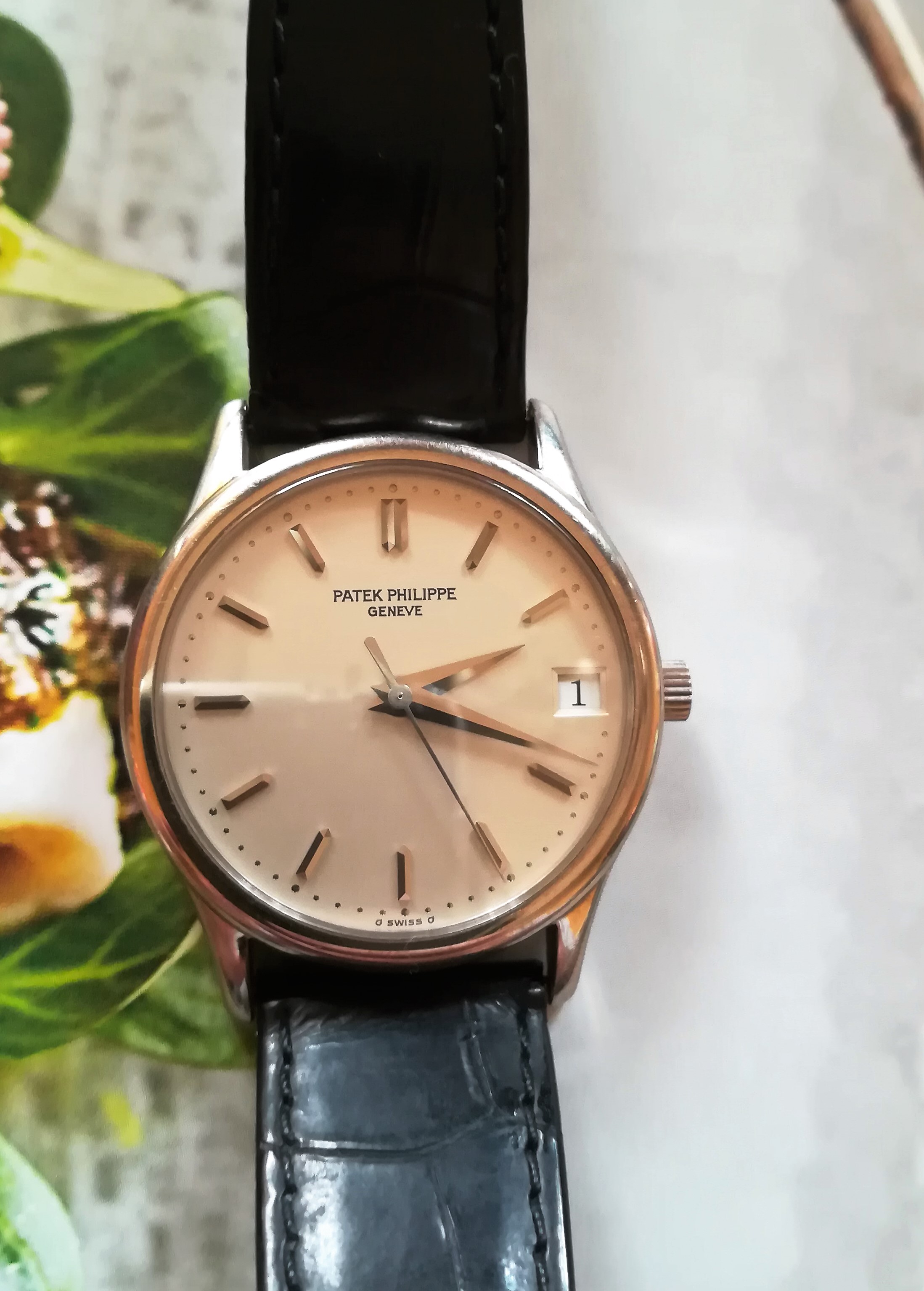
Some companies are built to become institutions — names that outlast generations, shape their industries and become part of history.
Patek Philippe belongs to the second category. Its watches are associated with wealth and status, but the business behind them is more interesting than the price of any individual timepiece. For almost two centuries, the company has had to preserve technical knowledge, maintain quality, adapt to changing markets and make decisions that protect its reputation beyond the lifetime of any one owner.
Its most distinctive modern chapter began in 1932, when the Stern family acquired the Geneva manufacturer. Four generations later, the family remains in control. The company has grown into a global luxury name while retaining a rare degree of independence in an industry shaped by large groups and changing ownership.
To understand how that happened, it is necessary to go back to the beginning, before the Stern family, before the Nautilus and before the modern idea of a luxury watch as an investment.
1839: A business begins in Geneva
On 1 May 1839, Antoine Norbert de Patek and François Czapek established a watchmaking business in Geneva under the name Patek, Czapek & Cie. The company began at 29 Quai des Bergues, producing watches for a market that valued precision, craftsmanship and fine finishing.
Patek was a Polish political émigré who had settled in Geneva. Czapek was an experienced watchmaker. Their partnership created the foundation, but the business that became Patek Philippe would take shape through another important relationship.
In 1844, Patek met the French watchmaker Jean Adrien Philippe at the Paris Industrial Exposition. Philippe had developed a keyless winding and time-setting mechanism. Instead of using a separate key to wind a watch, the wearer could operate the mechanism through the crown. It was a practical improvement that helped make watches easier to use.
Philippe joined the company in 1845. The name changed to Patek, Philippe & Cie in 1851, marking the beginning of the partnership that gave the modern company its name.
The new firm was not simply selling watches. It was developing technical ideas and building a reputation for complicated mechanisms, fine decoration and reliable workmanship. As the business expanded, it moved to larger premises at 41 Rue du Rhône in 1853. The address would remain central to the company's identity.
From pocket watches to technical distinction
During the nineteenth century, Patek Philippe developed a reputation for technical ambition. Its work included complicated watches, striking mechanisms and increasingly sophisticated calendar functions.
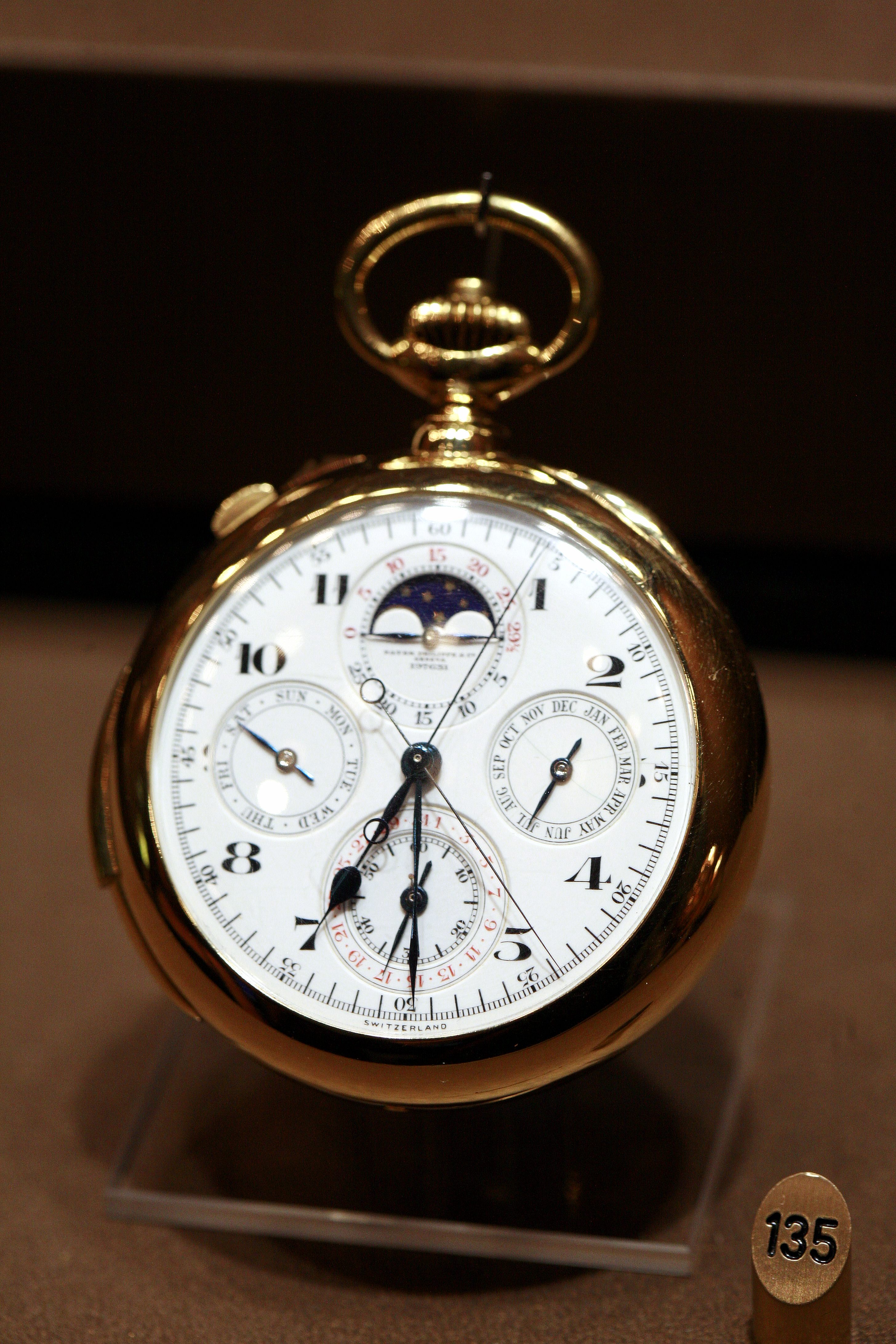
In 1868, the company made a wristwatch for Countess Koscowicz of Hungary, an important early milestone in the development of the wristwatch. In 1889, it received a patent for a perpetual calendar mechanism. In 1902, it patented a double chronograph, and further work on split-seconds chronographs and perpetual calendar wristwatches followed in the early twentieth century.
These inventions mattered because they established a pattern that would continue through the company's history: technical complexity was treated as part of its identity, not simply as a marketing feature. The company sought to make mechanisms that were difficult to design, assemble, regulate and service.
The watches also reflected the changing expectations of customers. Pocket watches had been personal objects, often commissioned for specific individuals. Wristwatches gradually became more practical and more widely adopted. Patek Philippe adapted to that change while maintaining its emphasis on precision and finishing.

1932: The Stern family takes ownership
By the early 1930s, Patek Philippe was facing a difficult economic climate. The Great Depression had put pressure on luxury businesses and demand for expensive watches. The company needed a stable owner with a long-term view.
Charles and Jean Stern were already connected to the manufacturer. Their family business, Cadrans Stern Frères, supplied watch dials to Patek Philippe. In 1932, the brothers acquired the company.
The decision was significant. Rather than treating Patek Philippe as a distressed asset to be stripped down or quickly resold, the Stern family took responsibility for its future. They brought a supplier's understanding of the product and a manufacturing perspective to the ownership of the whole business.
One of the early priorities was to strengthen control over production. The Sterns understood that a reputation for quality could not depend entirely on outside suppliers. The company gradually brought more expertise and manufacturing capability closer to the business itself.
That approach helped establish a defining feature of Patek Philippe: ownership and manufacturing strategy would be closely connected. The family was not simply protecting a name. It was investing in the capabilities required to keep the name credible.
Henri Stern: building the international business
The next generation brought a more international outlook. Henri Stern, son of Charles, joined the business in 1935. He later spent important years in the United States, where he helped develop the company's distribution and relationships with retailers and collectors.
In 1945, Henri established the company's American distribution operation. He returned to Geneva and became chairman in 1958. His work helped turn Patek Philippe from a respected Swiss manufacturer into a name with a stronger international presence.
That expansion required more than placing watches in shop windows. Luxury watchmaking depends on trust. Retailers must understand the product, customers must believe in its quality and the manufacturer must be able to support the watch long after the initial sale.
Henri's contribution was therefore commercial as well as cultural. He helped create the international relationships through which the company could reach new customers while keeping control of its identity.
Philippe Stern: protecting the manufacture through a changing industry
Philippe Stern joined the family business in 1963 and returned to Geneva in 1966. He became president in 1993, after years of learning the company from the inside.
His leadership coincided with a period of profound change in watchmaking. The arrival of inexpensive quartz technology had challenged the traditional Swiss mechanical watch industry. Quartz watches were accurate, practical and often far less expensive to produce. Mechanical watchmakers had to decide whether to compete on price, move upmarket or redefine the value of their craft.
Patek Philippe chose to defend mechanical watchmaking through technical achievement, design and long-term value. The Nautilus, introduced in 1976 and designed by Gérald Genta, became one of the clearest expressions of that strategy. At a time when steel sports watches were not universally regarded as luxury objects, the Nautilus presented a different proposition: a high-end mechanical watch with a distinctive case, integrated bracelet and recognisable design.
It was a commercial risk as well as a design statement. The watch was unusual, expensive and deliberately different from the traditional dress watches associated with the company. Over time, it became one of the most recognisable luxury watch designs in the world.
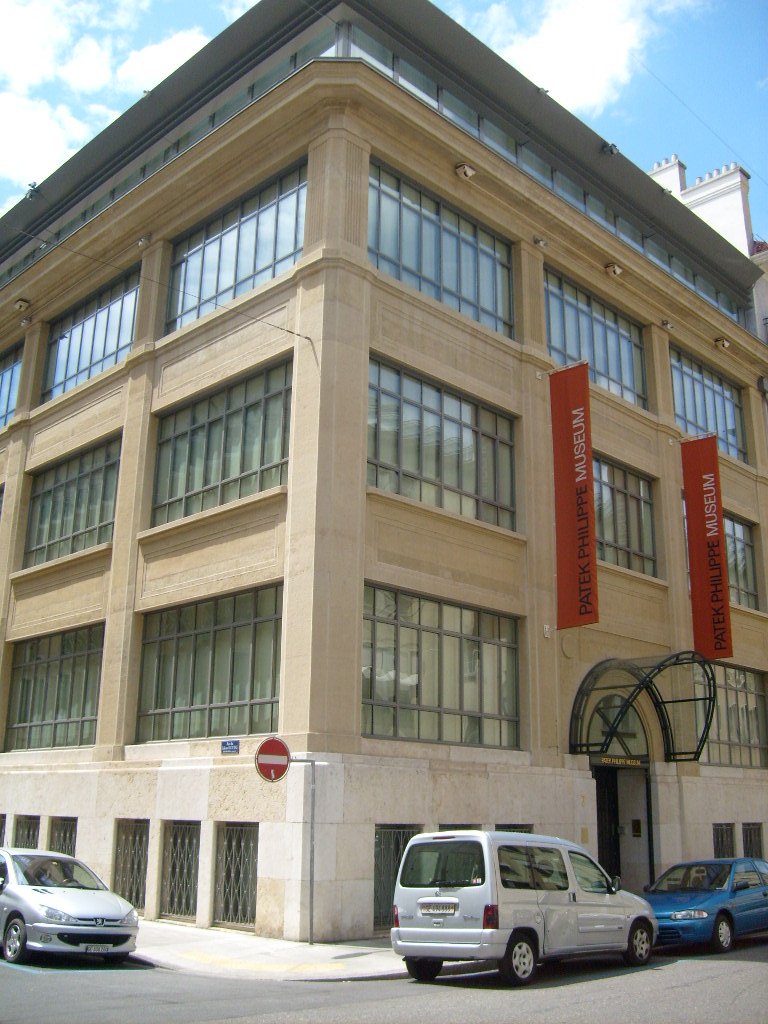
Philippe also invested in the foundations of the business. In 1996, the company inaugurated a centralised manufacture at Plan-les-Ouates, bringing activities that had been spread across several locations into a more integrated operation. In 2001, he opened the Patek Philippe Museum in Geneva, placing the company's history within the wider story of horology. The renovated Geneva Salon followed in 2006.
In 2009, the company introduced the Patek Philippe Seal. It set out standards for the finished watch, including precision, construction, finishing and service. The seal represented a broader philosophy: quality should be defined by the manufacturer and supported throughout the life of the product.
Philippe Stern died on 14 June 2026, aged 87. His influence remains visible in the company's manufacturing structure, its museum and its insistence that the value of a watch extends beyond the moment it is sold.
Thierry Stern: the fourth generation
Thierry Stern joined Patek Philippe in 1990. He spent years learning the business before becoming vice-president in 2003 and president in 2009. His leadership has continued the family approach while bringing the company into a new era of global visibility.
One of the most ambitious projects under his leadership was the Grandmaster Chime, introduced for the company's 175th anniversary in 2014. It combined an extraordinary number of complications in a single wristwatch and demonstrated the level of technical and finishing work the company was prepared to undertake.
In 2020, Patek Philippe inaugurated its PP6 manufacture at Plan-les-Ouates. The facility brought together a large part of the company's production and assembly activities under one roof. It was a major investment in the industrial base of a business that continues to position itself around mechanical watchmaking and long-term independence.
The Stern family has also maintained a distinctive approach to leadership. Its own account of succession emphasises that a future leader must share the family's values and understand the business, rather than inherit responsibility through family connection alone. Thierry's son Adrian has begun learning the company and its watchmaking traditions. That is an early stage of preparation, not a publicly confirmed succession appointment.
The business behind the watch
Patek Philippe's position is often discussed through scarcity, waiting lists and resale prices. Those subjects are visible, but they do not explain the whole business.
The company's model rests on several connected decisions.
Independent ownership. Family control gives the company the ability to take a long view. It does not remove commercial pressure, but it can make it easier to prioritise continuity over short-term financial targets.
Control of manufacturing. Bringing more production knowledge and capability inside the business helps protect standards and preserve specialist skills. It also requires substantial investment in people, equipment and facilities.
Product discipline. The company has resisted turning its identity into a race for volume. Its collections are carefully managed, and its reputation depends on customers believing that quality is more important than simply producing more units.
Retail relationships. A luxury watch is not a one-time transaction. The customer relationship involves advice, service, maintenance and, in many cases, a relationship that continues across generations.
After-sales responsibility. The Patek Philippe Seal includes a commitment to service and maintenance for watches dating back to the company's founding. This is commercially important because it supports confidence in the product long after the original purchase.
These elements reinforce one another. Manufacturing capability supports product quality. Product quality supports reputation. Reputation supports customer demand. Long-term ownership gives the company a reason to invest in the capabilities that sustain the cycle.
Why the famous watches matter
The Calatrava, introduced in 1932, became a defining expression of the company's approach to elegant, legible design. Its restrained proportions and clean dial offered a counterpoint to watches whose complexity was more immediately visible.
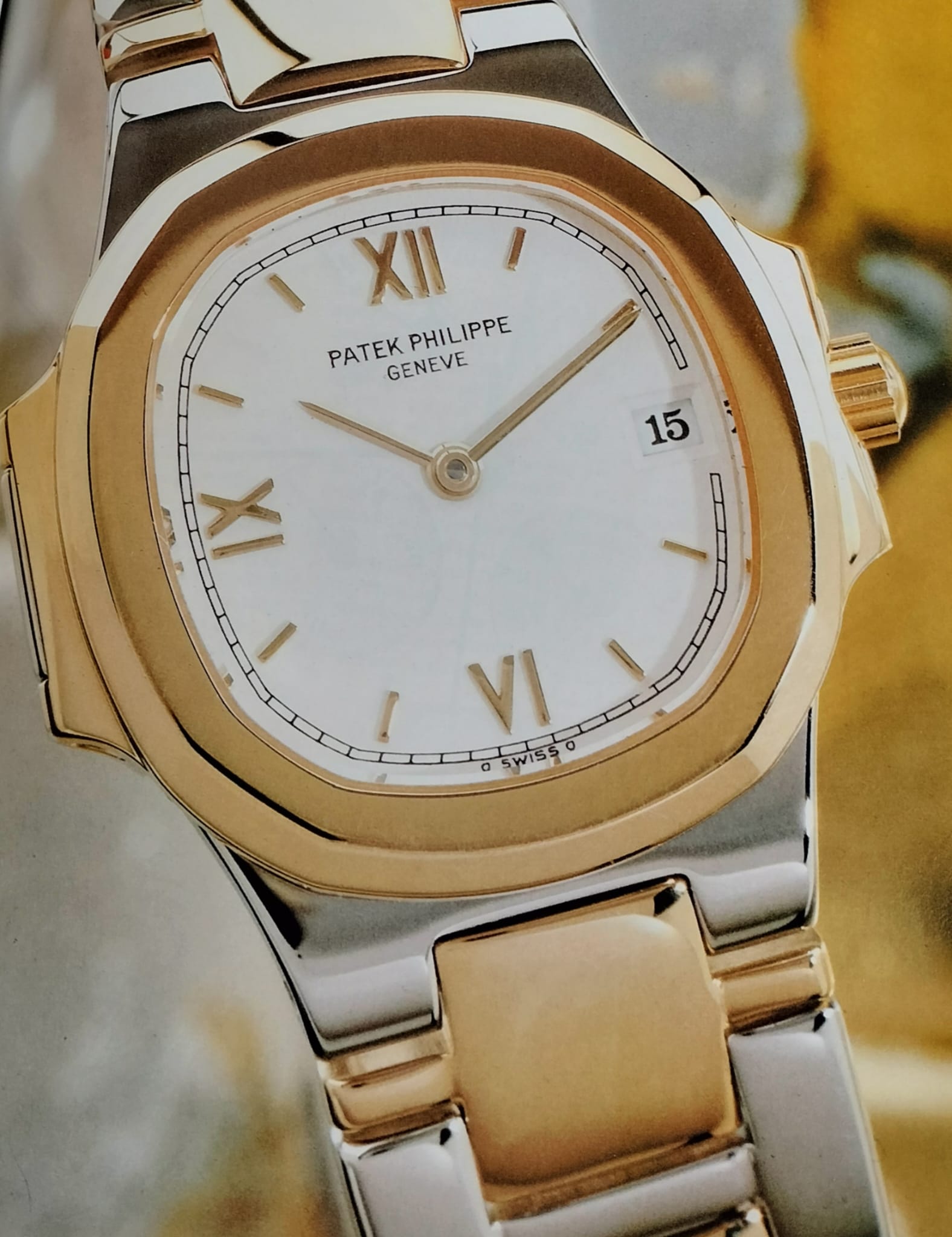
The Nautilus, launched in 1976, took the company in another direction. Its steel sports-watch design helped establish a new category of luxury product and became one of the most recognisable designs in modern watchmaking.
The Golden Ellipse, introduced in 1968, showed a different kind of independence. Its case proportions were based on the golden ratio, giving it an elliptical form that stood apart from conventional round watches.
Other pieces, including the Henry Graves Supercomplication and the Grandmaster Chime, demonstrate the company's willingness to pursue complicated watchmaking at the highest level. They are not simply expensive objects. They are evidence of accumulated knowledge, specialist labour and an engineering culture that takes years to develop.
For the business, these watches serve different purposes. Some provide enduring collection identity. Others demonstrate technical capability. Together, they give customers reasons to recognise the brand across generations.
2026: a legacy still being presented to the world
The company's story is not frozen in the past. In October 2026, Patek Philippe held its Watch Art Grand Exhibition in Milan from 2 to 18 October. The exhibition occupied more than 2,900 square metres and welcomed approximately 68,000 visitors and 400 journalists, according to the company.
The event presented the manufacture's history, métiers d'art, technical work and contemporary collections. It also included seven limited-edition series created for the Milan exhibition and new pieces such as the Gondolo Ladies First. The timing was especially significant because 2026 marks 50 years since the introduction of the Nautilus.
These exhibitions are more than product showcases. They allow the company to explain its methods, present its heritage and introduce its work to audiences who may never visit the Geneva manufacture. They are also a reminder that a luxury brand must continue to communicate what makes its products different.
The challenge is to remain recognisable without becoming static. Patek Philippe has to attract new customers while preserving the confidence of existing collectors. It must continue to innovate without allowing innovation to undermine the qualities that made the company valuable in the first place.
A watch designed to outlive its owner
Patek Philippe's most recognisable advertising line says: "You never actually own a Patek Philippe. You merely look after it for the next generation."
The phrase is memorable because it expresses a business philosophy as well as a product promise. A watch is presented not as a disposable purchase, but as an object that can be maintained, repaired and passed on.
That idea also describes the company's own history. Patek Philippe has survived changes in technology, economic downturns, shifts in consumer taste and the passing of its founders. The Stern family has continued to invest in the manufacture, the people who work there and the knowledge required to make complicated mechanical watches.
There is no guarantee that any company will remain successful forever. Family ownership brings its own challenges, and heritage alone cannot protect a business from poor decisions or changing markets. The achievement of Patek Philippe is that it has repeatedly connected its history to practical decisions about manufacturing, leadership, product and service.
The company began with a partnership between two watchmakers in Geneva. It became a family-owned manufacturer with a global reputation because successive generations treated the business as something to preserve and develop, rather than something to consume.
That may be the most important lesson in its story. A legacy is not created by a name, a famous product or a single successful generation. It is built when the next generation receives something worth protecting, understands why it matters and has the ability to carry it forward.
Sources & further reading
- Patek Philippe, The Founders
- Patek Philippe, The Stern Family
- Patek Philippe, Anchored in Geneva and Switzerland
- Foundation Haute Horlogerie, Jean Adrien Philippe
- Sotheby's, The Complete Guide to the Patek Philippe Nautilus
- WatchTime, In Memoriam: Philippe Stern
- Patek Philippe, Watch Art Grand Exhibition Milan 2026
- Patek Philippe, The Patek Philippe Seal
Image credits and licences
- Antoine Norbert de Patek portrait: Wikimedia Commons, public domain. Source file.
- Patek Philippe pocket watch, Geneva, 1888: photograph by Daderot, CC0 1.0 Public Domain Dedication. Source file and licence.
- Patek Philippe Museum: photograph by Mourad Ben Abdallah, CC BY-SA 3.0. Source file. Licence.
- Patek Philippe pocket watch: photograph by Rama, CC BY-SA 2.0 France. Source file. Licence.
- Patek Philippe Nautilus ladies model: photograph by Clyde94, CC BY-SA 4.0. Source file. Licence.
No Patek Philippe press photographs, catalogue images, social media images or archive photographs with unverified reuse rights have been reproduced. The workshop painting is identified as a general historical illustration, not as a photograph of the company's own factory. No Stern family portraits are included because a sufficiently clear commercial reuse licence was not verified.